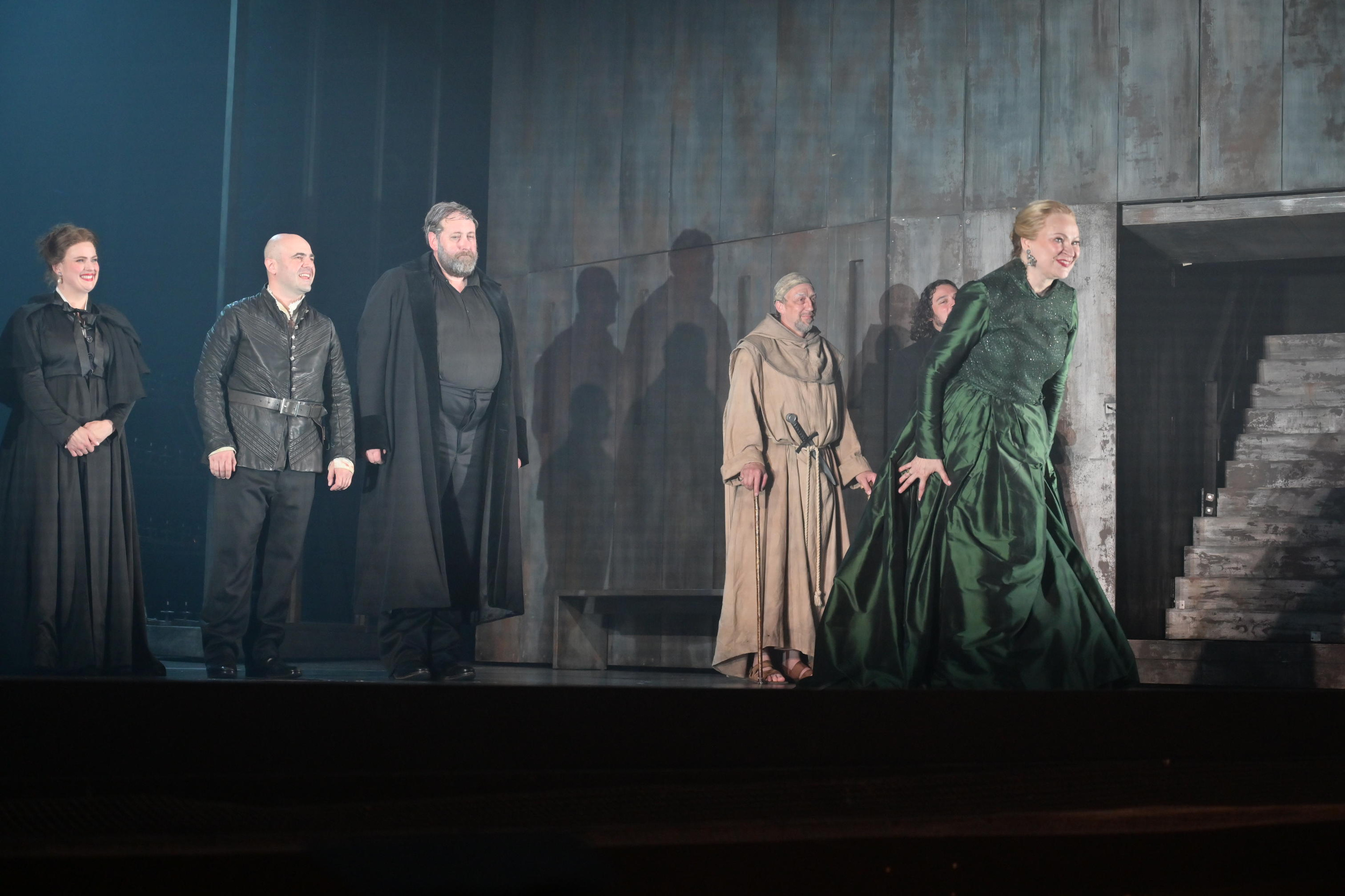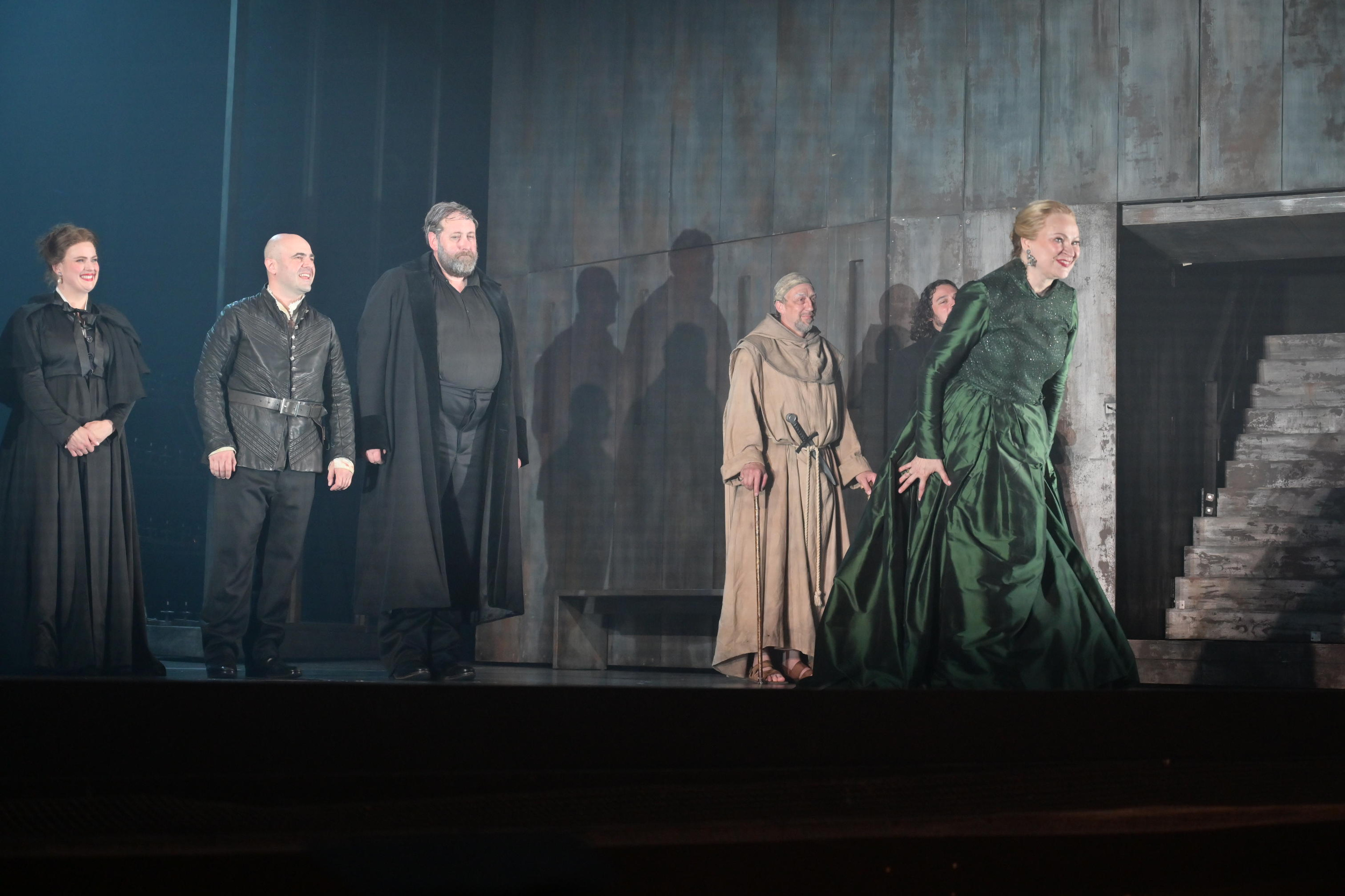
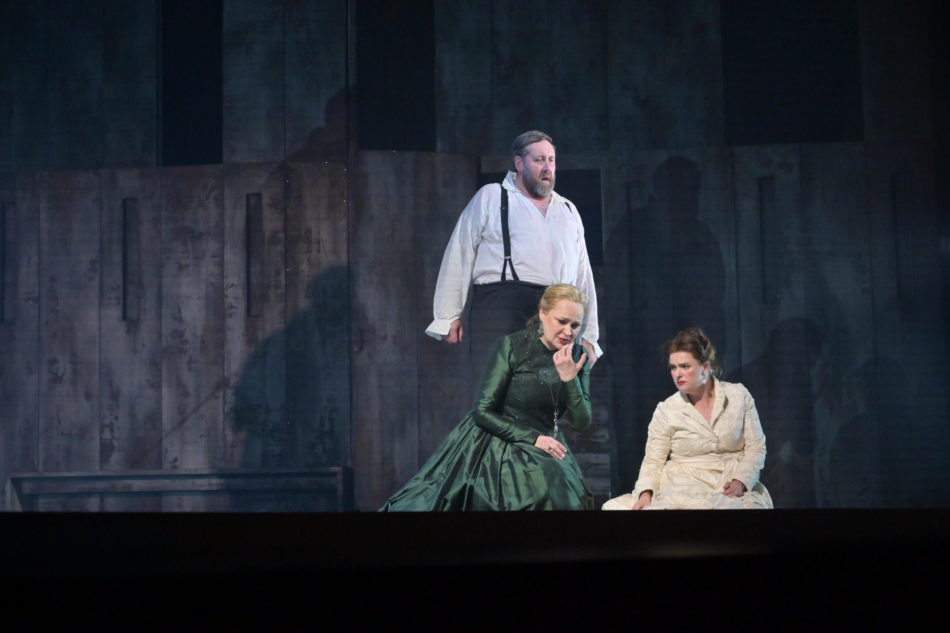

Grange Park Opera, the Surrey-based opera company that welcomes British audiences into its blooming gardens—where the musical experience is accompanied by the indulgence of elegant picnics, much like at Glyndebourne Opera House—features Verdi’s Don Carlo in its 2026 summer season. Joining a lineup that includes Rossini’s Il Barbiere di Siviglia, Wagner’s Das Rheingold, Tavener’s Krishna, and Melissa Hamilton’s Night of Ballet, the cast proudly features the highly respected name of a Romanian musician with an exceptional international career: Ruxandra Donose.
Ruxandra Donose made her debut as Princess Eboli in Verdi’s Don Carlo at Grange Park Opera in 2016. Ten years later, the company has revived the acclaimed production by the multi-award-winning British director Jo Davies, inviting the mezzo-soprano back to breathe life into the very same score. It is a demanding, splendid, and heartbreaking role; the story of a woman who falls victim to her own beauty—a “fatal gift” that unlocks every door to loneliness and sorrow. It is the role of a woman who, her pride deeply wounded, turns to treachery, only to be utterly consumed by remorse.
This entire storm of emotions is translated into mesmerizing music and gestures by Ruxandra Donose. In the 2026 season of Don Carlo, she is flawlessly accompanied by a stellar cast. The leading roles feature tenor Otar Jorjikia (Don Carlo), soprano Elin Pritchard (Elisabeth de Valois), baritone Michel de Souza (Rodrigo), and bass Matthew Rose (King Philip II), all under the firm and precise baton of conductor George Jackson, who leads the English National Opera orchestra.
“It is a cornerstone role in the mezzo-soprano repertoire,” Ruxandra Donose shared in an interview for the Inimile vorbesc românește vodcast earlier this spring, before rehearsals began. “And, almost incredibly, it is the 10-year anniversary of the first time I sang this role, also at Grange Park Opera, where I am returning to celebrate the fact that I am still friends with Princess Eboli.”
And indeed, Ruxandra Donose is friends with Eboli. So close, in fact, that her voice manages to encompass an entire history of love and hope, despair and regret, a thirst for revenge, and the lingering hope that something might still be mended.
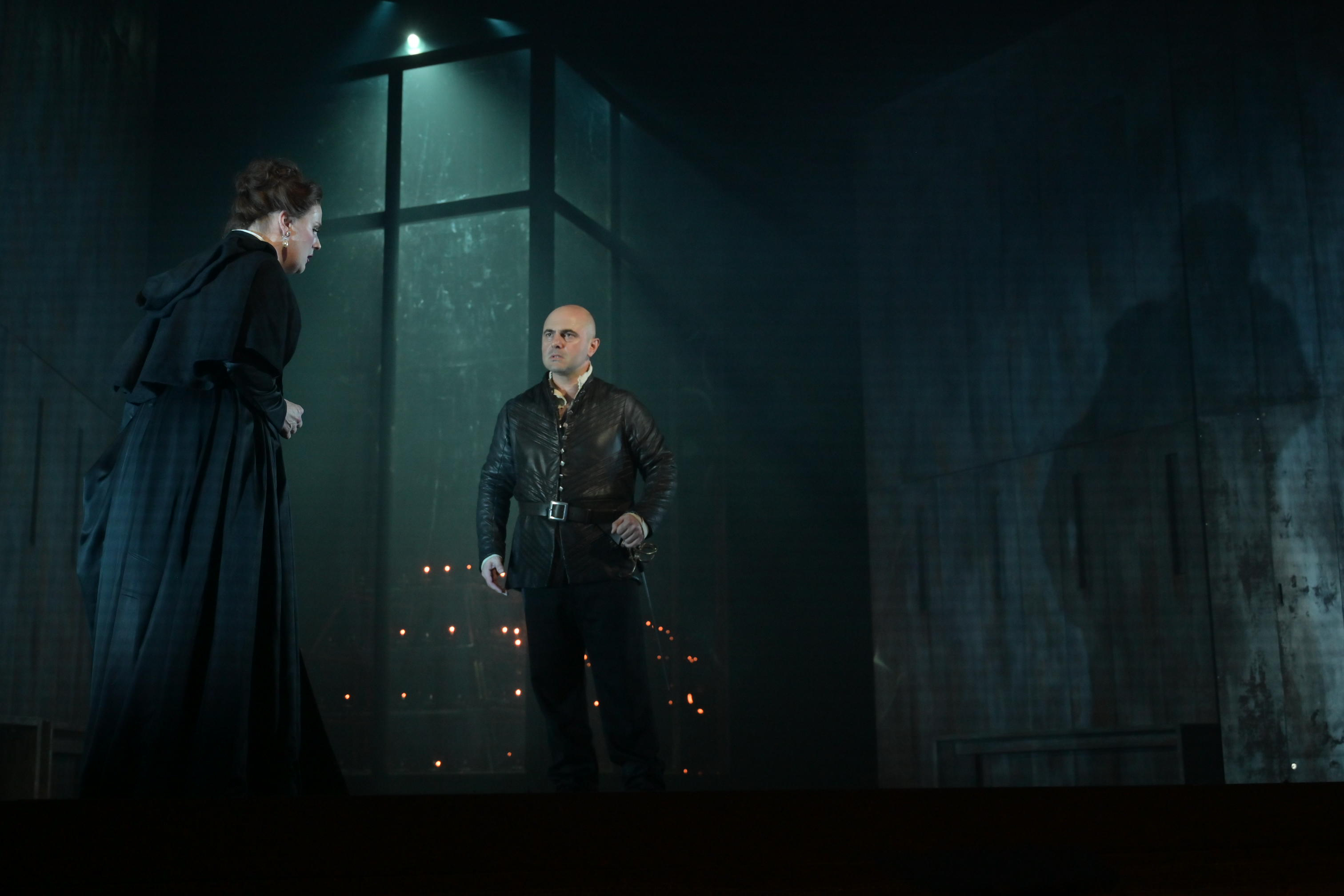
I attended the performance on June 19, 2026, stepping abruptly from the blazing Surrey sun into the deep shadows of Leslie Travers’ set design. This Grange Park Opera production stages the four-act version, omitting the introductory act where Don Carlo and Elisabeth de Valois fall in love. Instead, the audience is thrust directly into a cage mystically lit by thick candles and somber, chiaroscuro lighting—an enclosed space where captive souls wrestle with the weight of unwanted choices.
Otar Jorjikia did not overplay his theatrical gestures; instead, he gathered an impeccable architecture and precision of sound within his voice. Through his robust and perfectly controlled tone, he managed to convey every delicate nuance of affection, despair, and the heartbreak of a hopeless lover. The duet between Don Carlo and his friend, Rodrigo—“Dio, che nell’alma infondere”—that lifelong oath of friendship that illuminates the first part of the opera, raised the artistic bar to the highest level and never let it drop. The steady voices of tenor Otar Jorjikia and baritone Michel de Souza intertwined in a flawless sonic symbiosis. In fact, throughout the four acts, beyond the brilliance of each soloist’s signature arias, what stood out was the clarity and radiance of the duets, trios, and quartets. In less demanding opera houses, these can easily devolve into multi-voiced chaos due to even the slightest—or sometimes significant—imprecisions.
The voice of baritone Michel de Souza reminded me of an anecdote about the venerable Romanian tenor Ion Piso. He once recounted how, during an audition at a Romanian opera house, a jury member asked him to open his mouth to check if he was hiding a device in his throat that helped him sing with such a splendid, vibrant resonance. The exceptional Brazilian baritone, trained in great British music academies, might very well have faced a similar request had he lived a few decades earlier.
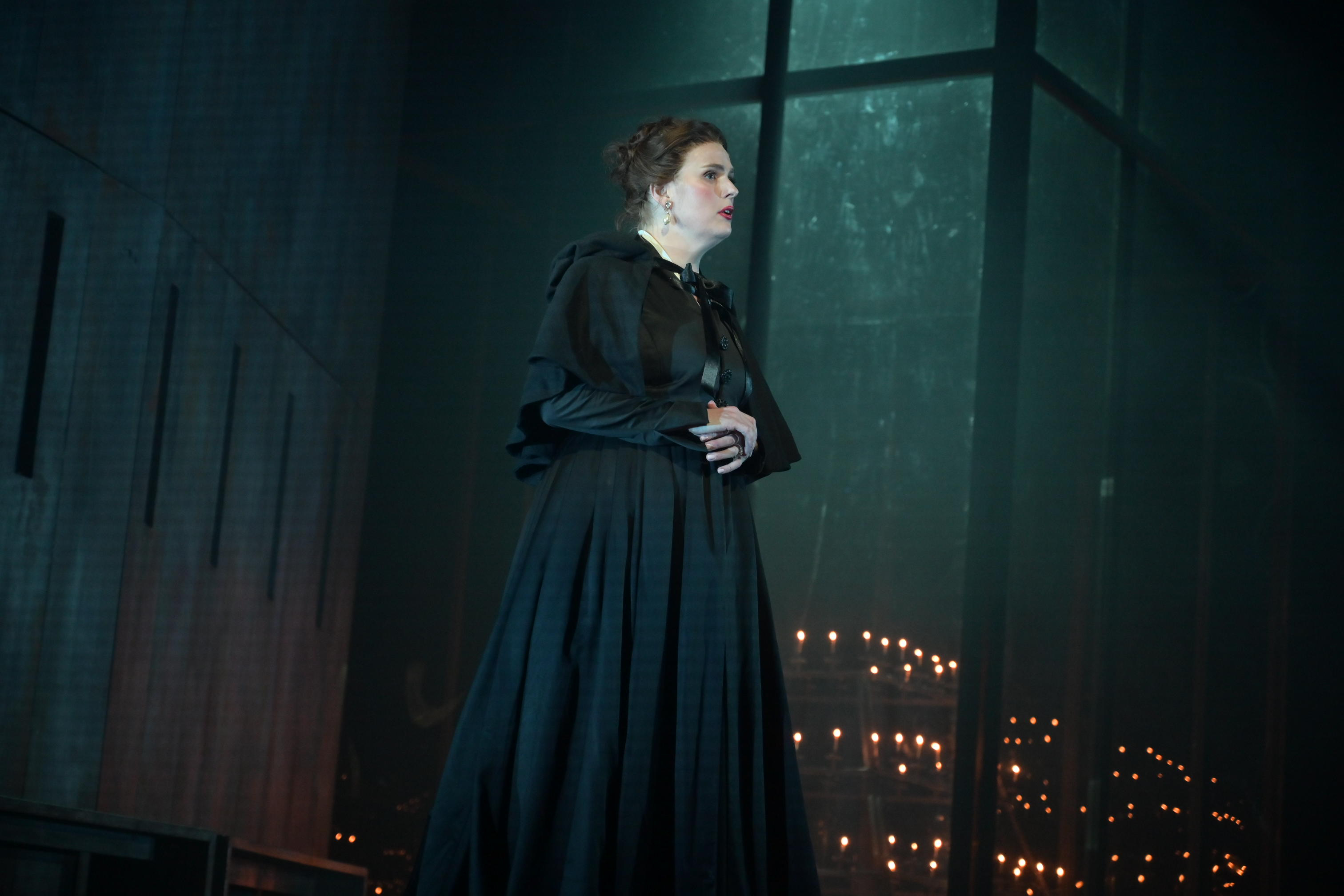
Elisabeth de Valois found an absolutely consummate interpreter in soprano Elin Pritchard. Beyond her noble stage presence, her uniquely beautiful voice—powerful without ever being shrill, illuminating moments of tension with tender mezza-voce passages—flawlessly shaped the drama of a young woman who believed she would unite her destiny with a prince, only to find herself the prisoner of an icy court and an implacable sovereign. King Philip II dominated the stage through the centrality of his role and the profound depth of bass Matthew Rose’s voice. Despite his imposing physical stature, he managed to convey—even more than dominating royalty—the drama of a power rendered powerless in the face of its own feelings. His famous monologue, “Ella giammai m’amò,” which was thoughtfully transcribed in English on one of the pages of the program book (a true editorial masterpiece!), was not merely an aria, but a heartbreaking portrait of supreme loneliness: a man who rules empires, crushed by the certainty that the woman beside him never loved him.
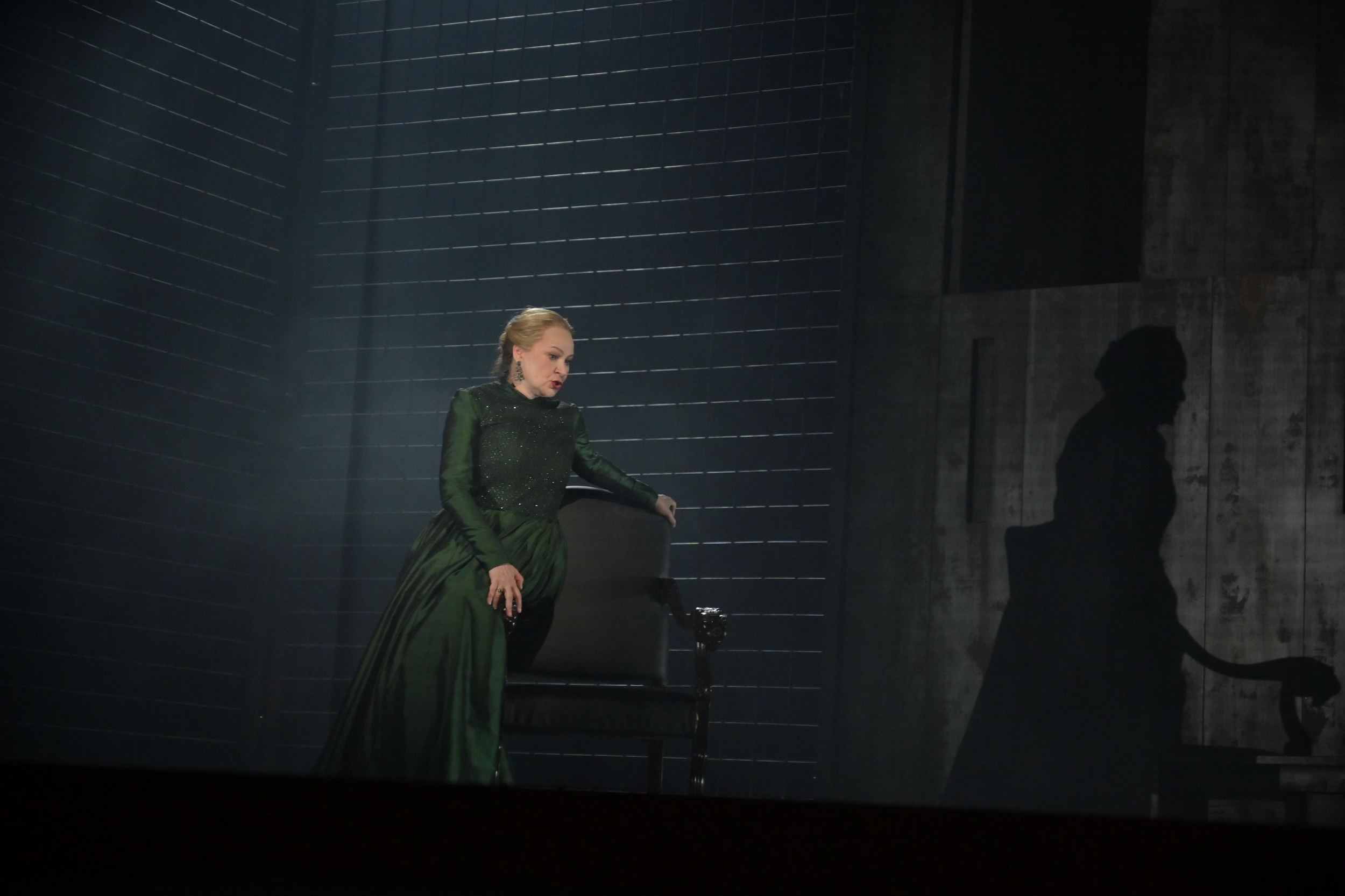
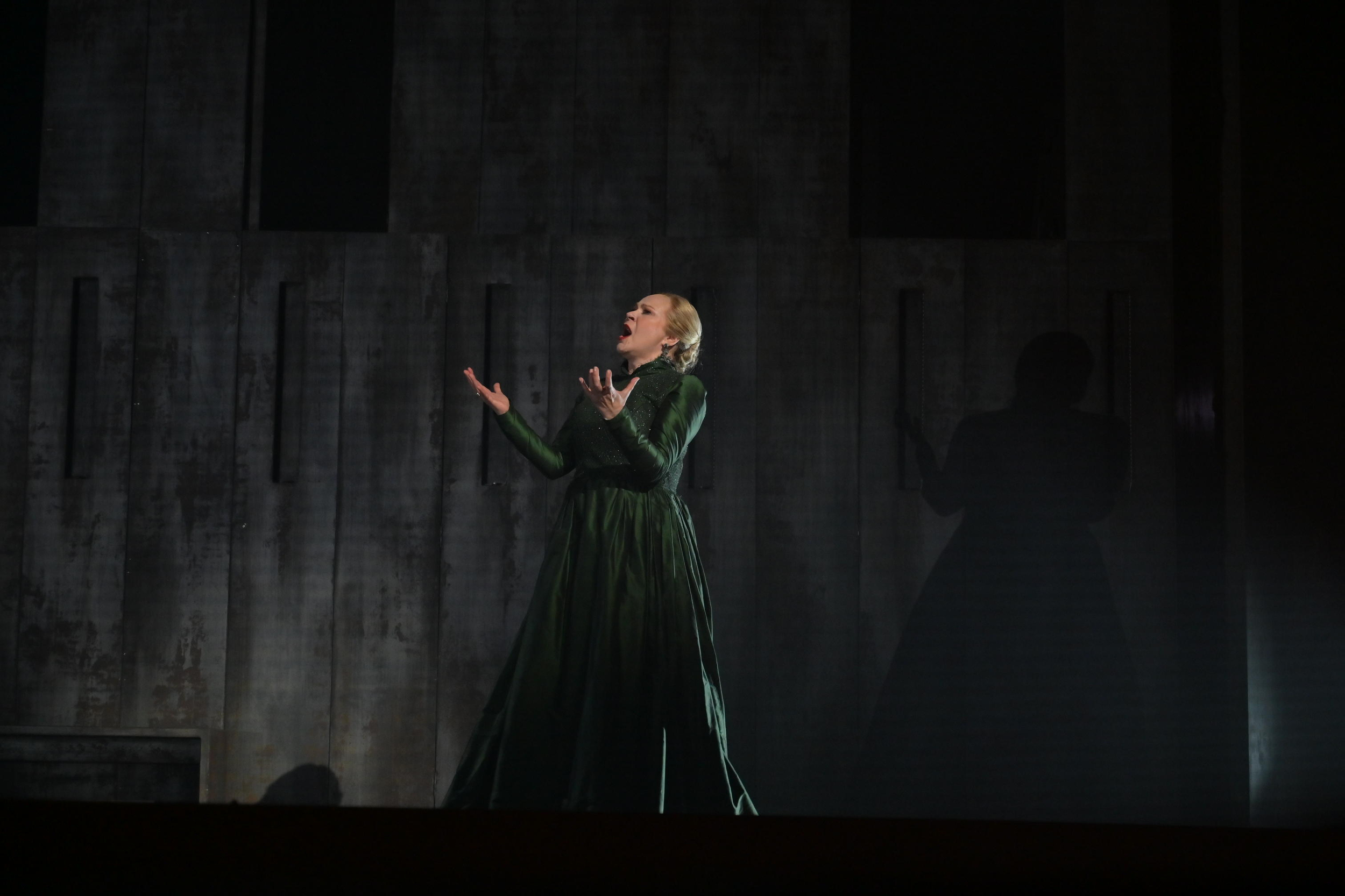
From this tapestry of unfulfilled affections and absolute power emerges, with unsettling intensity, the character portrayed by Ruxandra Donose. Bringing Princess Eboli to life, the mezzo-soprano knows how to measure every emotion with a mastery that reveals decades of excellence on the world’s greatest stages. If at first seduction and courtly games float lightly, like a temptation, in the oriental-scented melismas of “Nel giardin del bello”—the Veil Song—hiding danger beneath a mask of exuberance, as the consequences of her betrayal overwhelm her, the weight of guilt alters her very breath.
The absolute boiling point of the opera was, without a doubt, the grand aria at the end of the third act, “O don fatale.” Ruxandra Donose sings it with the flawless vocal technique that has cemented her reputation. Her unique, absolutely inimitable voice—velvety and deep, yet capable of finding a piercing, cutting strength when the dramatic register demands it—makes this the aria where one truly understands all the nuances of her “friendship with Eboli.” Ruxandra Donose takes upon her shoulders the weight of beauty’s fatal gift, simultaneously confessing and forgiving the vanity of her character, a woman whom she manages, through her art, to absolve before the audience and history alike.
It came as no surprise when the audience erupted into applause and ovations at the end of Ruxandra Donose’s principal aria.
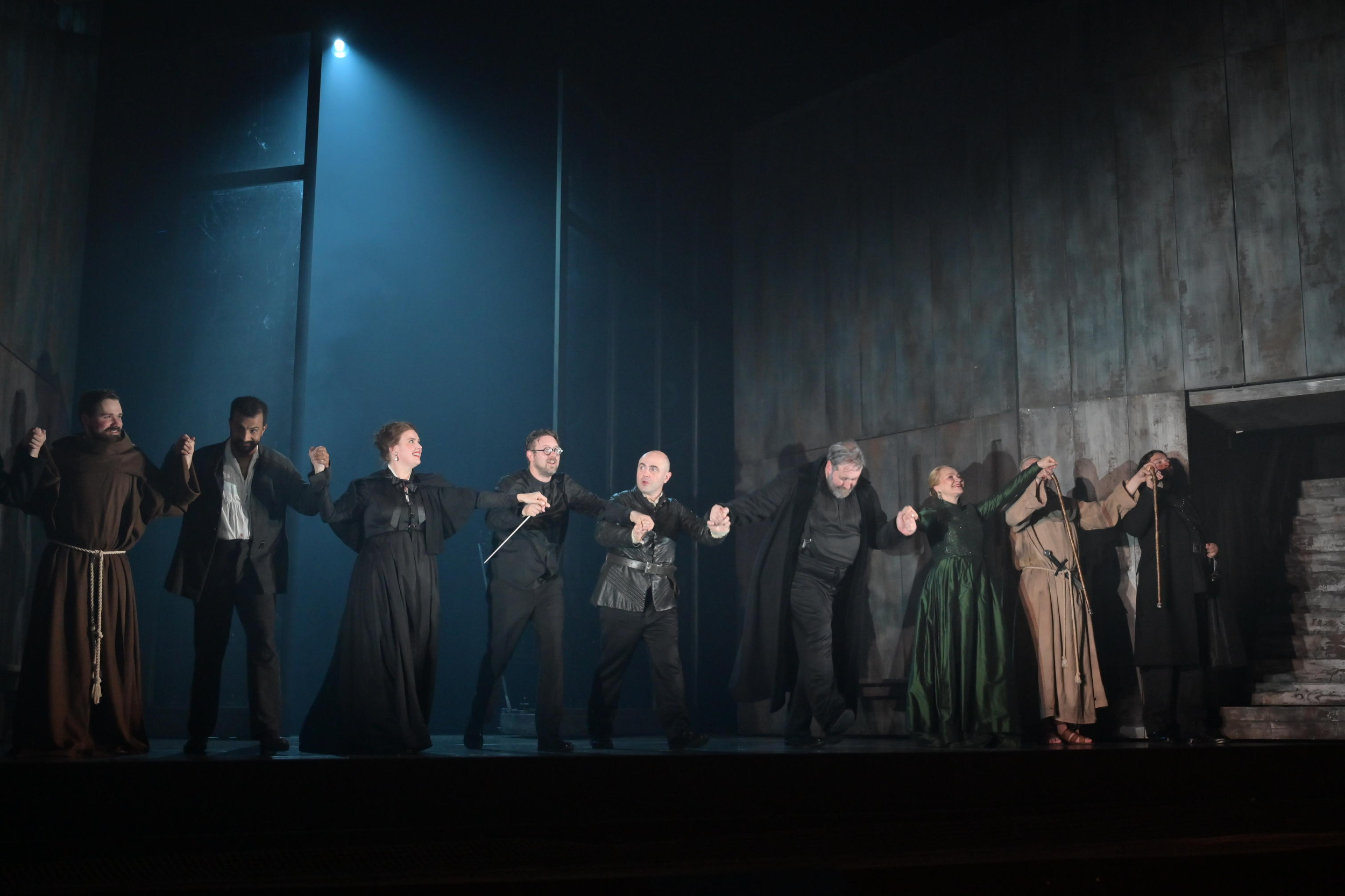
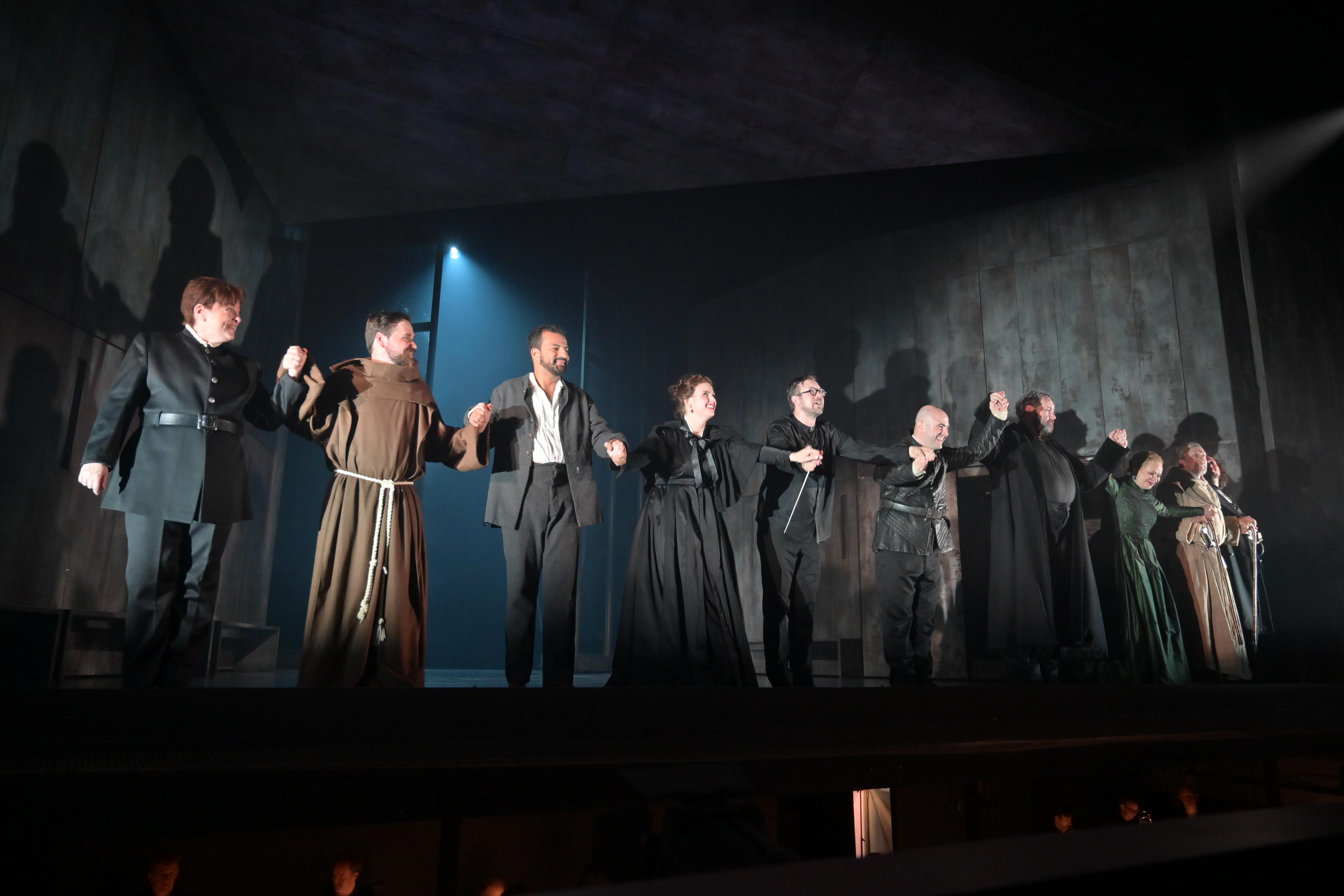
Endless applause and ovations also marked the—perhaps unexpected—conclusion of the opera. The directorial vision at Grange Park Opera deviates from the classical version of the libretto, seemingly returning to the suggestions of Schiller’s play, upon which the libretto was originally based. (In the finale conceived by director Jo Davies, the Grand Inquisitor murders Don Carlo, slitting his throat in a brutal gesture that extinguishes all hope and perfectly closes the story’s dark circle.) As the curtain fell, the emotion built up in the auditorium was released in a generous wave of ovations that embraced the entire cast on stage. The applause intensified, vibrating even stronger, the moment conductor George Jackson stepped up alongside the artists—the man who, leading the exceptional ENO orchestra, was the musical architect of an endlessly beautiful evening.
Photography by Paul Buciuta
Production:
-
Director – Jo Davies
-
Set Designer – Leslie Travers
-
Costume Designer – Gabrielle Dalton
-
Lighting Designer – Anna Watson
-
Movement Director – Lynne Hockney
-
Fight Co-ordinator – Alison de Burgh
-
Chorus Master – Philip White
Cast:
-
King Philip II – Matthew Rose
-
Don Carlo – Otar Jorjikia
-
Rodrigo – Michel de Souza
-
The Grand Inquisitor – Julian Close
-
Elizabeth de Valois – Elin Pritchard
-
Princess Eboli – Ruxandra Donose
-
A Monk – Harrison Chéné Gration
-
Count of Lerma – James Schouten
-
Tebaldo – Claire Pendleton
-
Voice from Heaven – Rosa Sparks