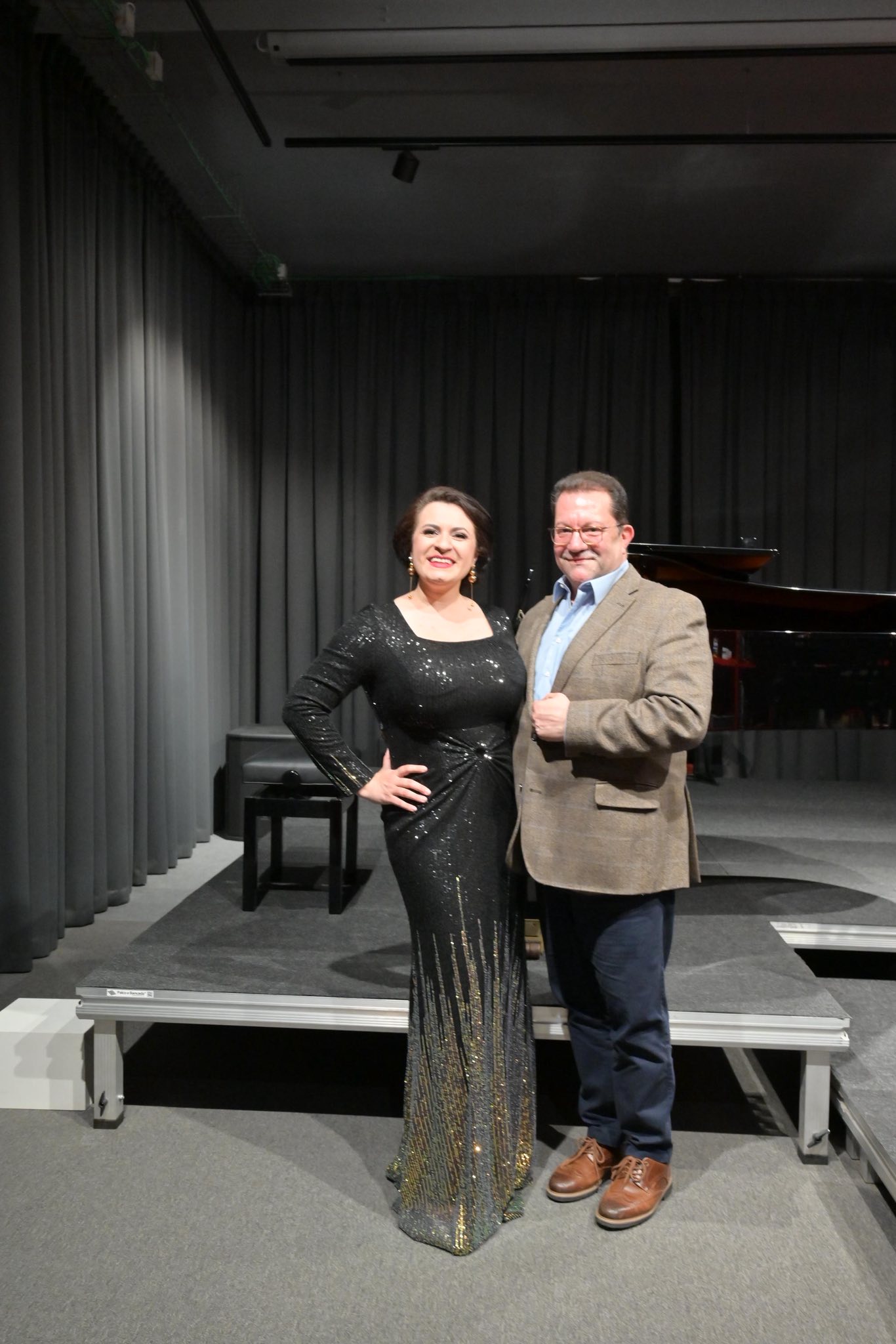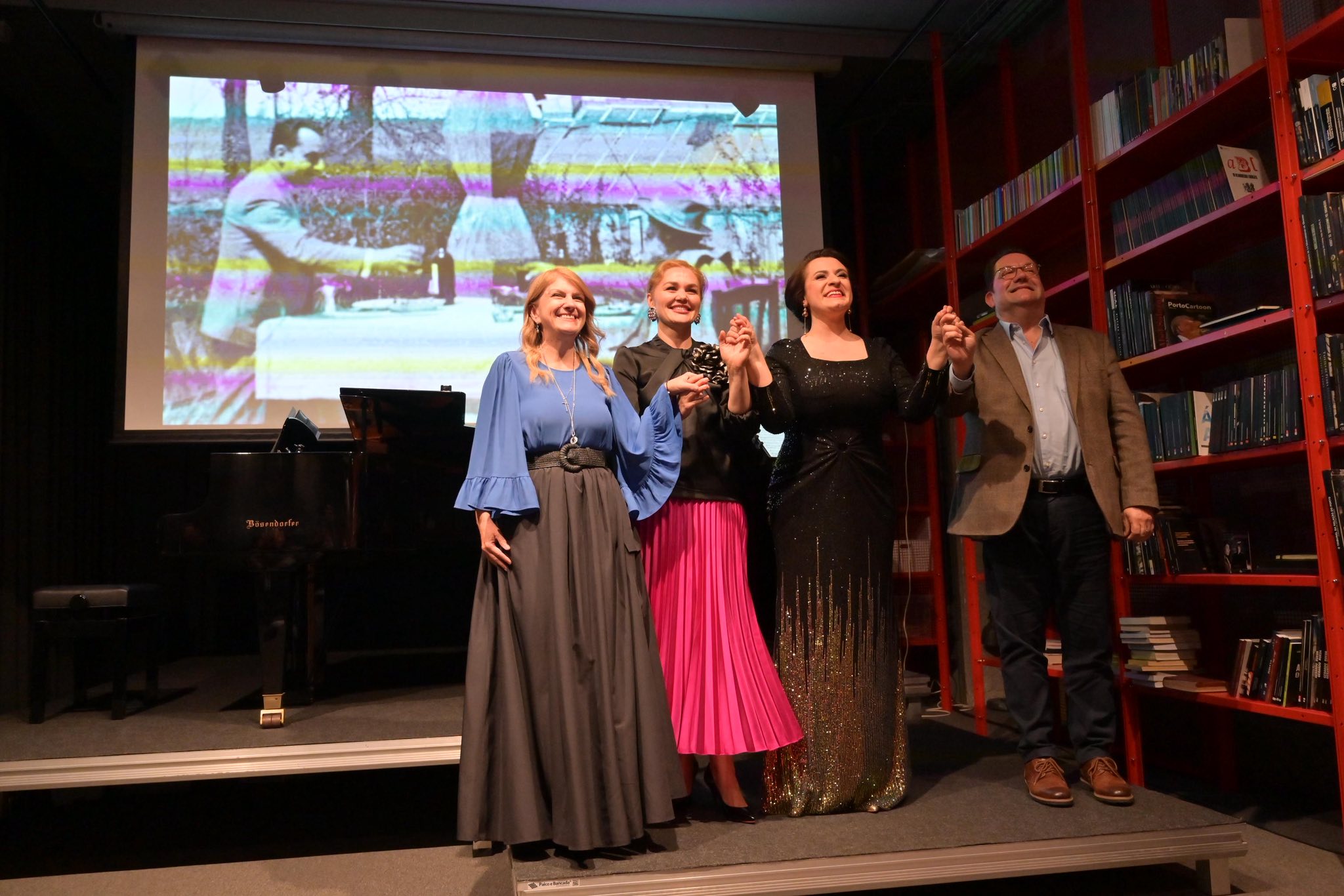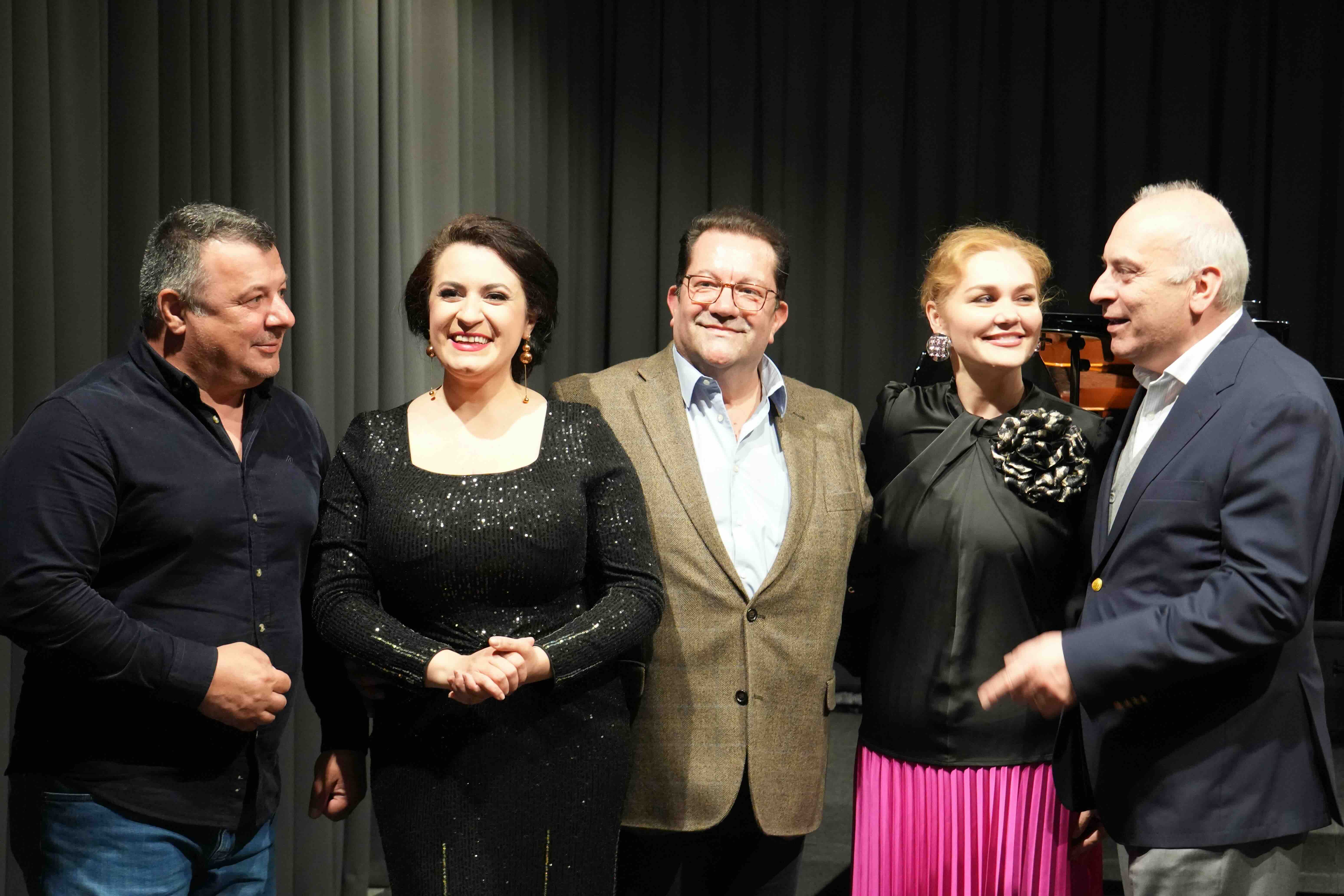
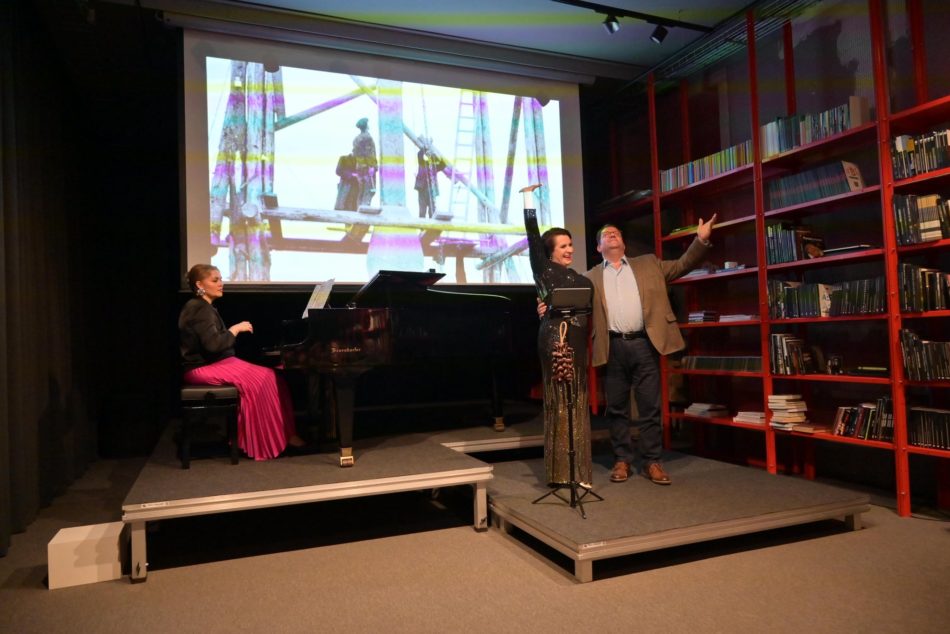

The BrancuSING concert in Porto, held on April 17, 2026 – an Atlantic stop on the international tour presented to the world by soprano Rodica Vică to celebrate the 150th anniversary of the great sculptor Constantin Brâncuși’s birth – offered the audience far more than the exceptional repertoire prepared for the world’s major capitals.
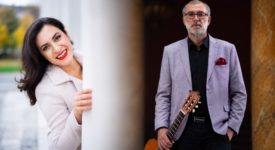
It also set the stage for a surprise encounter. At one point, the two artists on stage, soprano Rodica Vică and pianist Angela Drăghicescu, were joined by another voice… from the audience. A voice that was grand, wonderfully beautiful, and utterly breathtaking!
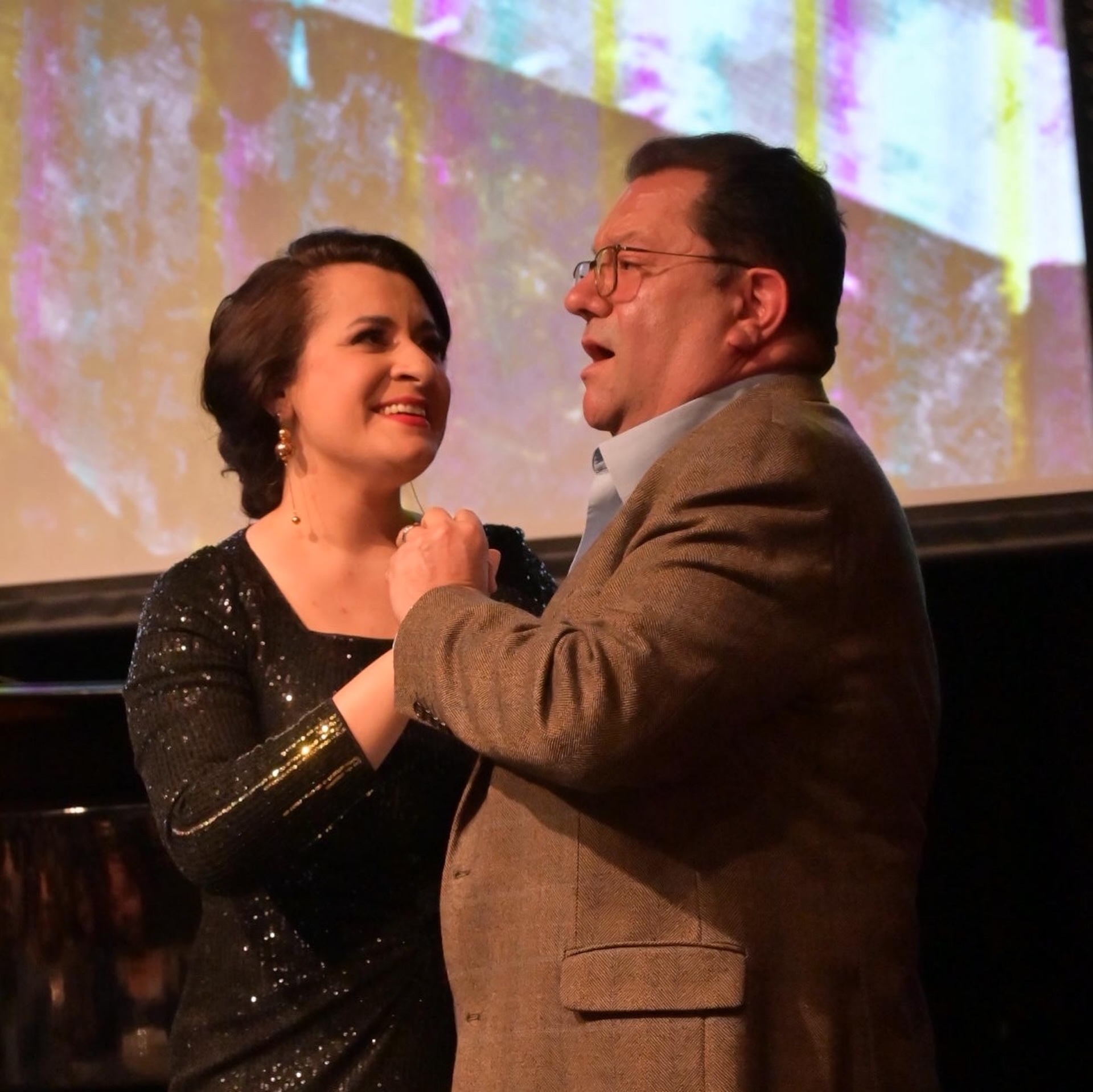
It was a truly unexpected moment (even if, of course, it had been slightly prepared in advance). For the audience, however, it remained a pure surprise to hear Agustín Lara’s Granada performed as an impressive duet, with voices intertwining harmoniously and spectacularly.
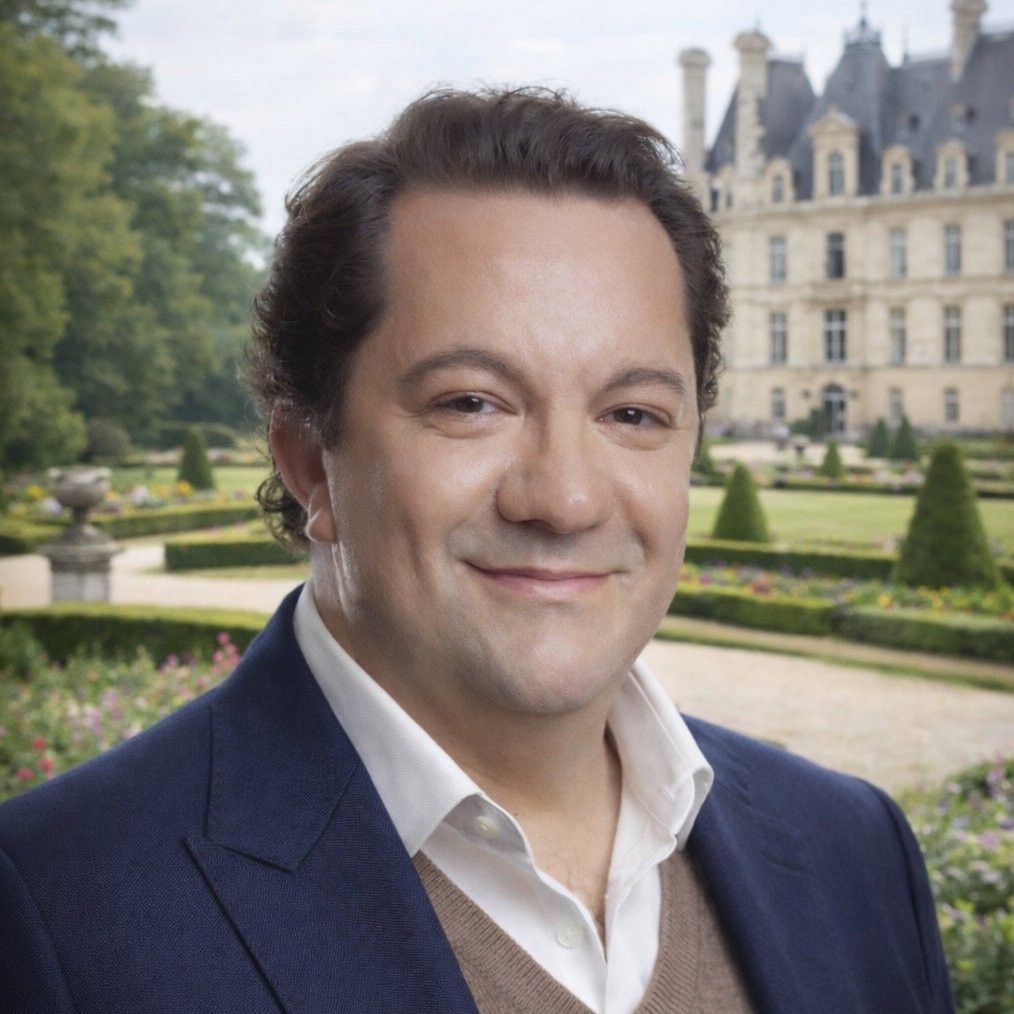
This is how we met the Portuguese tenor Paulo Ferreira, an artist with a distinguished solo career who is currently a master of bel canto with exceptional results. Alongside professor Cecilia Fontes, Paulo Ferreira also coordinated the singing masterclass held by Rodica Vică in the same city, at the Escola Superior de Música e Artes do Espectáculo in Porto.
Taking advantage of this fortunate meeting, I asked tenor Paulo Ferreira to share a few thoughts on music and other miracles.
Please be part of this intimate conversation with Portuguese tenor Paulo Ferreira on the magic of the BrancuSING tour, the courage to believe in one’s path, and the art of passing on a lived experience.
Photographs by Paul Buciuta and Ilona Năstase
RevistaTango.ro: How did it all begin, and what first inspired you to start singing?
Paulo Ferreira: My journey began in a very natural, almost intuitive way. As a child, my inspiration came simply from listening to the radio and singing along with the voices I heard. It was something spontaneous, almost like a game, but it brought me a deep sense of joy.
Over time, that passion began to take shape. When I later entered my local music academy, I initially studied piano and cello. Singing, as a formal area of study, came later, with a greater sense of awareness.
What truly inspired me was not just singing itself, but the possibility of expressing something deeper — an emotion, an inner truth. From that moment on, everything grew through study, curiosity, and a constant desire to understand what it really means to sing.
RevistaTango.ro: Is anyone else in your family an artist?
Paulo Ferreira: I do not come from a family of artists, nor do I have anyone, close or distant, connected to music or the arts. I did not grow up in a creative or artistic environment; I come from a very humble background where music—especially classical music—was not seen as a possible path, but rather as something distant, almost unreachable.
However, this dimension emerged in me very naturally, almost as a discovery. I remember with great affection my first music teacher in general education, who had the sensitivity to recognize something in me and told me, when I was around 10 years old, that I had great talent. At the time, I did not truly understand what she meant. Only later did I realize the importance of those words and how that first recognition shaped my path.
RevistaTango.ro: Looking back, what do you consider your greatest artistic achievements, and which stages have left the deepest mark on you?
Paulo Ferreira: I’m not particularly fond of the word “achievements.” I prefer to think in terms of milestones — and above all, as natural consequences of a path built through work, persistence, and time.
I remember a student once asking me how I had come to sing at the Berlin Philharmonie, the Metropolitan, and other major venues where I was fortunate enough to perform. The truth is, I didn’t really know how to answer. There is no formula, no single moment that explains it. It was simply the result of a journey — of already working within contexts of that scale. Perhaps that is why I never experienced those moments as extraordinary from the outside, but rather as something that gradually became natural within me.
If there is something that remains particularly meaningful, it is not a “triumph,” but a turning point. At a time when I was still mostly performing Christmas and Easter concerts in Portugal, and already at an age when some colleagues told me not to dream of a career — neither nationally nor internationally (I was 34 at the time) — I suddenly found myself, not long after, performing with Anna Netrebko at the Cologne Philharmonie.
That moment was deeply significant for me. It was my first major international appearance and, beyond visibility, it gave me something essential: confidence. At a time when my self-belief was fragile, it became a quiet confirmation that my path made sense.
That is perhaps what I value most — not the stages themselves, but what they awaken and transform within us.
RevistaTango.ro: When and why did you feel the calling to become a teacher and begin guiding young singers?
Paulo Ferreira: Teaching emerged as a very natural consequence of my path in Portugal. About 30 years ago, becoming a singer was, for many of us, still a distant dream. We mainly sang in Christmas and Easter concerts, some recitals, and the journey unfolded step by step. I gradually established myself as a student, took part in national and international competitions — where I was fortunate to receive recognition — and that opened doors for me to begin singing small roles at the Teatro Nacional de São Carlos.
I started teaching very early, at the age of 21, almost in parallel with the beginning of my performing career. At that time, teaching was not yet a fully conscious vocation, but rather a natural extension of what I was experiencing.
Later, life led me in other directions and, around the age of 35, I stepped away from teaching to dedicate myself fully to my singing career, which I lived very intensely abroad — mainly in Europe and also in the United States. Years later, for health reasons — thyroid cancer — I was forced to interrupt that path at a particularly demanding moment in my artistic life.
Returning to teaching, at a more mature stage, gave it a completely different meaning — deeper and more conscious. Today, teaching is not just about sharing knowledge, but about truly accompanying each student on their own path, with respect for their individuality and their time.
RevistaTango.ro: We met while your students were participating in Rodica Vica’s masterclass. How did you select the young talents who took part?
Paulo Ferreira: The selection was made by the singing department teachers, who chose the older students, aged between 13 and 17, taking into account their level of development and artistic maturity. These are young singers with great potential, curiosity, and a strong willingness to engage in demanding yet transformative work.
For me, it was a real pleasure to accompany them throughout this process and to witness up close the way they committed themselves to music with seriousness, enthusiasm, and a very genuine sense of authenticity.
RevistaTango.ro: How important, in your view, is participation in masterclasses for emerging artists?
Paulo Ferreira: For those growing up in a context like ours in Portugal, masterclasses are absolutely crucial. For a long time, access to different schools of thought, perspectives, and international experiences was not immediate, and these moments became true windows to the world.
I also speak from my own experience: it was often through such encounters that my horizons expanded, that I questioned myself, adjusted, and ultimately grew. There is something very special about a masterclass — that direct contact with artists who bring with them a lifetime of stage experience, trial, and discovery.
More than learning “answers,” one learns how to ask better questions. And that is essential in the making of a singer.
Today, looking at my students, I feel a deep sense of gratitude for being able to offer them that same opportunity. Because I know, from within, how much those moments can shape a path — sometimes quietly, but profoundly.
RevistaTango.ro: What do you think was the most valuable lesson your students took from working with Rodica?
Paulo Ferreira: One of the most valuable lessons was the way Rodica combined high standards with genuine human warmth. Beyond her unquestionable technical rigor and artistic commitment, what stood out was her kindness and her ability to make the students feel completely at ease from the very beginning.
This openness created an immediate sense of trust, allowing the students to take risks, experiment, and truly express themselves. At this age, that is absolutely essential. When a young singer feels welcomed and valued, the artistic response becomes freer and more authentic.
In many ways, that sense of closeness and positive self-confidence was just as important as any technical advice — because that is where true growth begins.
RevistaTango.ro: What are your impressions of the concert dedicated to Brâncuși?
Paulo Ferreira: It was a deeply special moment, and in many ways very close to what I experienced throughout my own career. I understand well what it means to carry “what is ours” beyond borders — there is a particular kind of pride in that, quiet yet deeply felt. I lived it many times while performing abroad, and I recognized that same emotion in this concert.
More than a performance, it felt like a sincere and respectful homage — something that connects us to something greater than the moment itself. It was one of those experiences that remain, not so much for what can be explained, but for what is felt and stays within.
It is also important to highlight the remarkable work of the Asociația Ino Music Art, whose vision and dedication made a project of this quality possible. Initiatives like this are essential for building cultural bridges and for supporting artistic projects with true meaning.
RevistaTango.ro: How did you experience the music, the repertoire selection, and the video projections?
Paulo Ferreira: There was a strong sense of artistic coherence and maturity. The repertoire selection revealed a clear and sensitive vision, and the way it was articulated with the texts and projections created a carefully constructed narrative.
Nothing felt excessive or decorative — each element contributed with intention and restraint. The projections did not simply illustrate; they extended the listening experience, opening space for imagination. There was a refined aesthetic intelligence at work, with everything serving the overall experience.
The result was a solid and engaging artistic journey, guided with balance and taste, allowing the audience to fully enter that world.
RevistaTango.ro: What was it like sharing the stage in a duet with Rodica?
Paulo Ferreira: When Rodica invited me, I must admit I was momentarily at a loss for words. An invitation like that, coming from an artist of her stature, can only come from a place of great generosity.
That moment, even as a small part of the program, was truly special and almost magical for me, for several reasons. First, because of the deep admiration I already had for her as a singer — and to sing alongside her was an invaluable gift.
Then, being accompanied at the piano by Angela Drăghicescu added yet another layer. Her sensitivity, her listening, and the way she embraces the music were, for me, the “cherry on top.”
I did not expect that moment to become so personally meaningful. It is something I will always carry with me, having had the privilege of sharing music with two extraordinary artists of such generosity.
RevistaTango.ro: What does the song “Granada” mean to you, and how did it feel to intertwine your voices?
Paulo Ferreira: “Granada” has always been part of my journey and my repertoire — it is very close to me, almost on an emotional level, because of its intensity and expressive world. To revisit it with Rodica was therefore a very special moment.
I often tell my students that a voice is not just a sound — it is a body with a beating heart. It carries personality, pulse, breath… and a certain tenderness that emerges from a very deep place. In that sense, intertwining our voices was a profoundly sensory experience.
I felt a natural affinity — as if our voices were made of the same elements: love for music, respect for singing, and a genuine openness to listen to one another. And when that happens, everything becomes simpler, more truthful, almost inevitable.